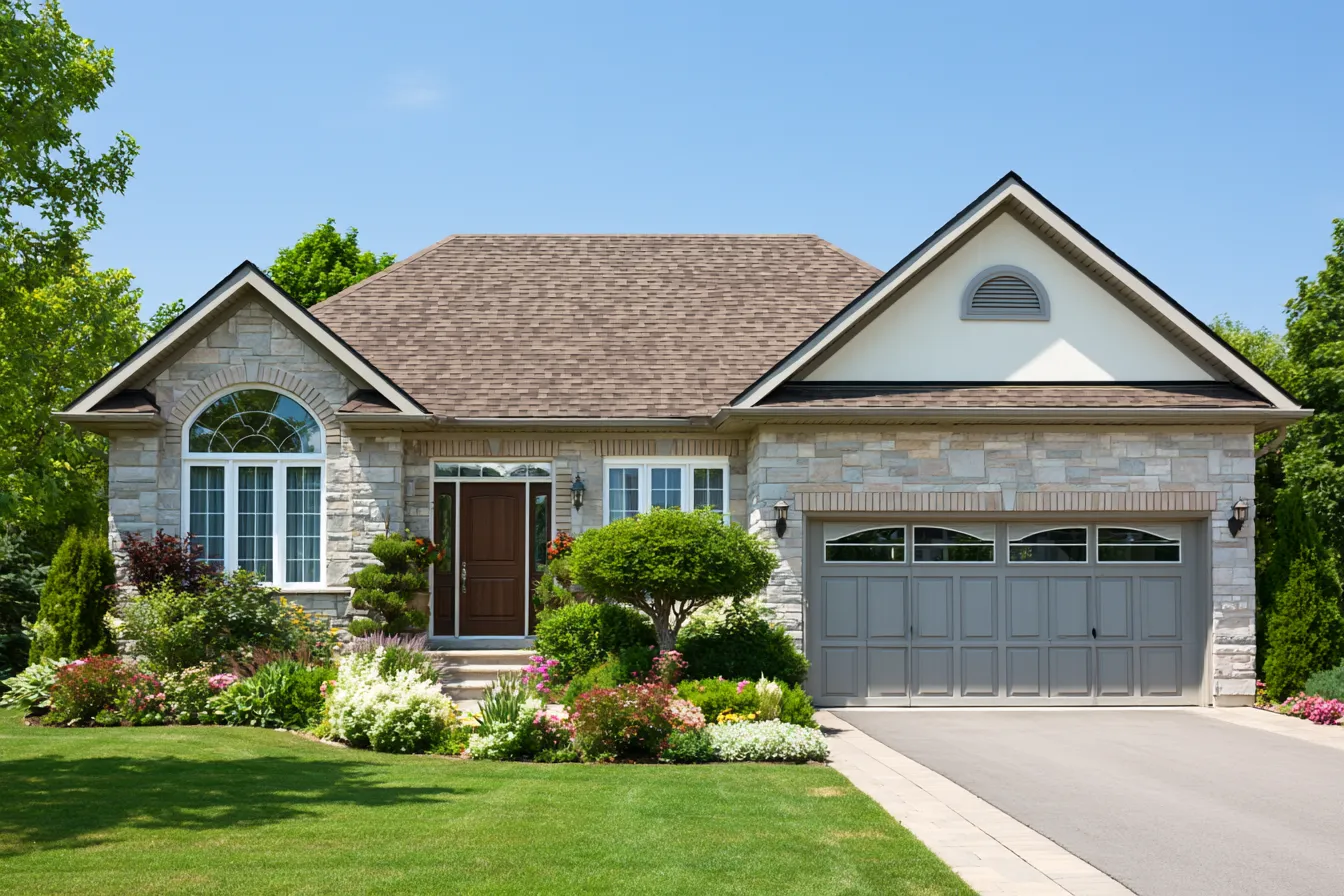
Gutter Installation in Aubrey, TX
A six-inch gutter carries close to twice the water of a five-inch one, and which your roof needs is a calculation settled before installation.
Gutters are the water-management half of the roof
A roof sheds thousands of gallons in a year and the gutters decide where every one of them goes. Undersized troughs overflow at the exact moment they are needed, which sends water down the fascia, behind the siding and against the slab. The damage that follows shows up as rotted trim, a wet crawlspace or a foundation problem, and almost nobody traces it back to a length of aluminum.
So how does anyone know which size a house needs? By calculation. The professional method sizes a gutter from the roof area feeding it, the pitch of that roof, and the local short-burst rainfall intensity, which is a published figure looked up for your location. North Texas is convective-storm country, where spring rain tends to arrive as short violent downpours instead of all-day drizzle, and short-burst intensity is precisely the number that kind of rain drives up. That is why six-inch runs get quoted here more often on larger and steeper roofs.
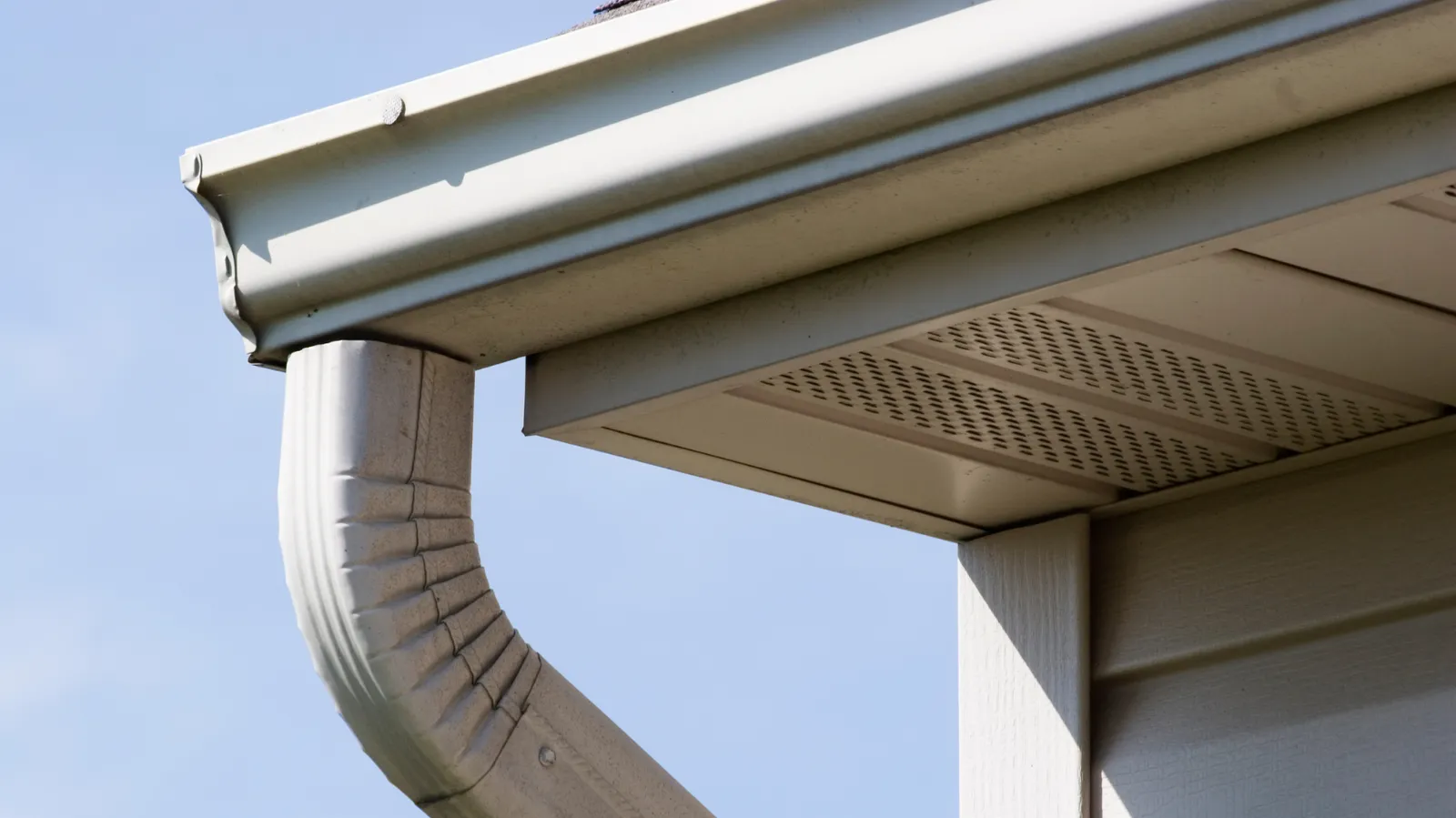
Everything an Aubrey gutter installation includes
Gutters are a system with four parts, and three of them are the ones people forget to ask about. Each one below is a separate line on an estimate.
- 01The trough, formed on site
- Seamless aluminum is rolled to the length of each run from a machine at the house, so joints exist only at corners and outlets. Fewer joints is fewer places to fail.
- 02The downspouts
- Half the system, and the half that gets shortchanged. Two-by-three downspouts pair with five-inch gutters and three-by-four with six-inch, at roughly one per thirty to forty feet of run.
- 03The hangers and the fascia behind them
- A gutter is only as sound as the wood it hangs on. Soft fascia is found when the old run comes off, and it is a separate line on the estimate.
- 04Where the water is released
- An outlet that discharges at the corner of the slab has moved the problem a few feet. Extensions and splash blocks carry it away from the foundation.

What gutters run on an Aubrey house
Gutters are priced off the measured run, and a whole house is commonly a hundred fifty to two hundred feet of it. What moves the number is height, the number of corners, how many downspouts the calculation calls for, and whether the fascia behind the old run needs work.
The figure comes from the measured house.
Get gutters priced- Stories and corners
- Downspout count
- What the fascia needs
Sizing the run to the roof above it
Subdivision roofs are frequently cut up: multiple planes, several valleys, and long runs of eave collecting from more area than they look like they do. A valley concentrates water from two planes into one point, and the gutter beneath it can be handling several times what the run either side handles.
That is where undersized systems give themselves away. The gutter is fine along most of its length and overflows in the same spot every heavy storm, which homeowners read as a blockage and treat by cleaning. Cleaning a correctly sized gutter fixes it. Cleaning an undersized one buys until the next downpour.
- 01The overflow point tells you the story
- Water coming over in one place under a valley is a sizing question. Water coming over everywhere is usually a blockage or a pitch problem.
- 02One downspout too few defeats the trough
- A correctly sized gutter with too few outlets still backs up, because the water has nowhere to leave. The count comes from the run length and the area above it.
None of this needs a bigger gutter everywhere. It needs the right size where the water concentrates, which is what measuring is for.
Where the water is meant to end up
Q1Should gutters go on with the roof or afterwards?
Q2Do I need six-inch gutters?
Q3Are gutter guards worth it?
Q4Where is the water actually supposed to end up?
Q5Who covers it if a run fails?
Get your Aubrey gutter installation priced
Send the address and a local roofer measures the runs, works out where the water concentrates and counts the outlets the roof needs, then prices it line by line at no charge. Take your time with it; there is no obligation attached and nothing to decide while somebody is standing there.