Commercial Roofing in Aubrey, TX
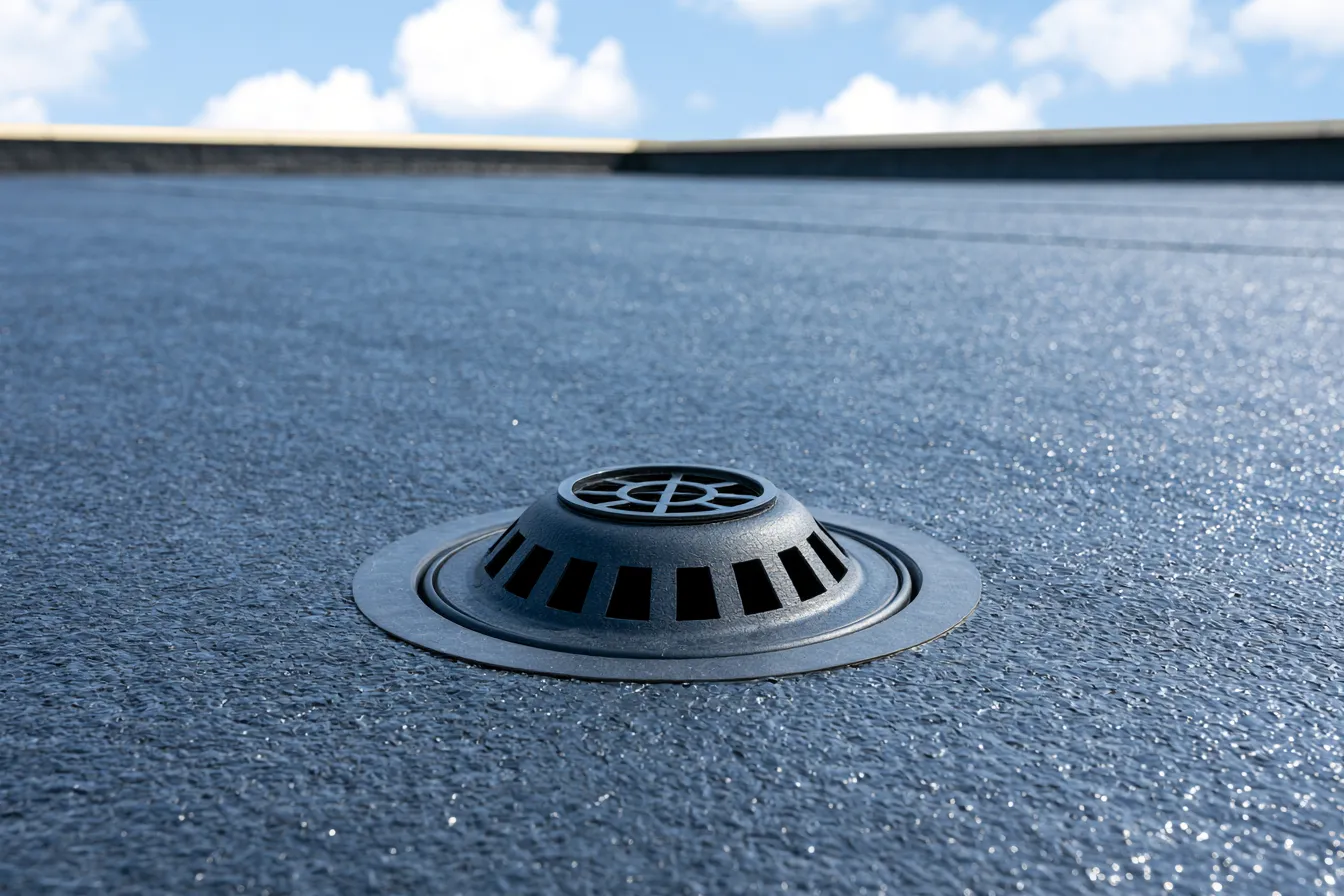
Is the water sitting on that commercial roof because the membrane failed, or because the drainage stopped keeping up?
Is this a roof surface problem or a drainage problem?
A low-slope roof is a drainage problem first. The surface barely tilts, so water leaves through drains, scuppers and internal leaders, and anything that slows that path leaves water standing where it was never meant to sit.
Ponding adds weight, holds heat against the membrane and finds every seam it can reach, so a roof surface that would have lasted its full term starts failing early at the joints. The practical consequence is that a survey covers the drainage and the roof together. A membrane repair on a roof that ponds buys a season and then reopens in the same place.
What goes on an Aubrey low-slope roof
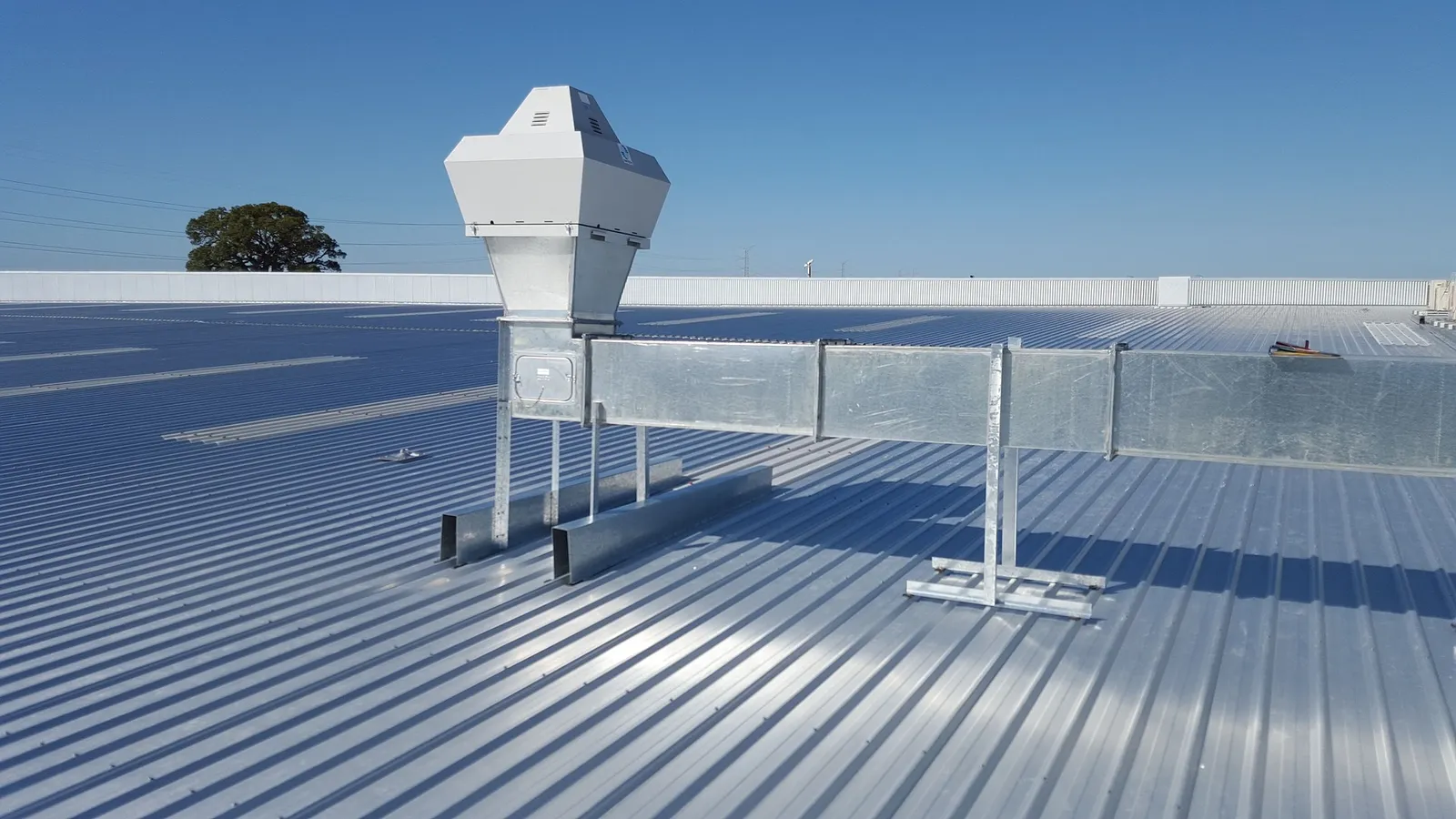
A roof that barely tilts has to move water sideways before it can move it down, and each of these systems does that differently. Which one is on your building changes what a repair looks like.
TPO and PVC
Thermoplastic panels are heat-welded at every lap, so the seams melt into a single continuous skin. The weld is the whole system: sound, it outlasts the sheet on either side of it; rushed, it is the first thing to open.
EPDM
Synthetic rubber sheet, seamed with tape or adhesive instead of heat. Forgiving in cold and long-lived on a simple roof, with the seams and the flashing details doing the work that welds do elsewhere.
Modified bitumen and BUR
Asphalt-based plies built up in layers, flame- or mop-applied. Heavy, tough underfoot, and forgiving of foot traffic around units, which is why they persist on roofs that crews cross often.
Coatings and restoration
A fluid-applied layer over a system that still has structure left, extending service life without a tear-off. It is a legitimate option on a sound deck and a way to postpone a problem on one that is not, so the survey has to come first.
What goes into commercial roofing in Aubrey
On buildings this size the work sorts by what the roof needs. What covers it matters less than people expect.
- 01Membrane and seam repair
- Seams, laps and penetrations resealed where the system has opened. Nearly every low-slope leak begins at one of those three and not in the field of the sheet.
- 02Penetrations, curbs and units
- Every pipe, vent and rooftop unit is a hole through the membrane with flashing around it. On a busy roof these outnumber every other leak source combined.
- 03Drainage
- Drains, scuppers and the slope feeding them. A roof that ponds after every storm is telling you the drainage stopped keeping pace with the building.
- 04Recover or replace
- Whether the existing system can carry a new layer, or whether the deck and insulation underneath mean it has to come off. That answer is found in the survey and it changes the number substantially.
Why a flat roof needs a membrane
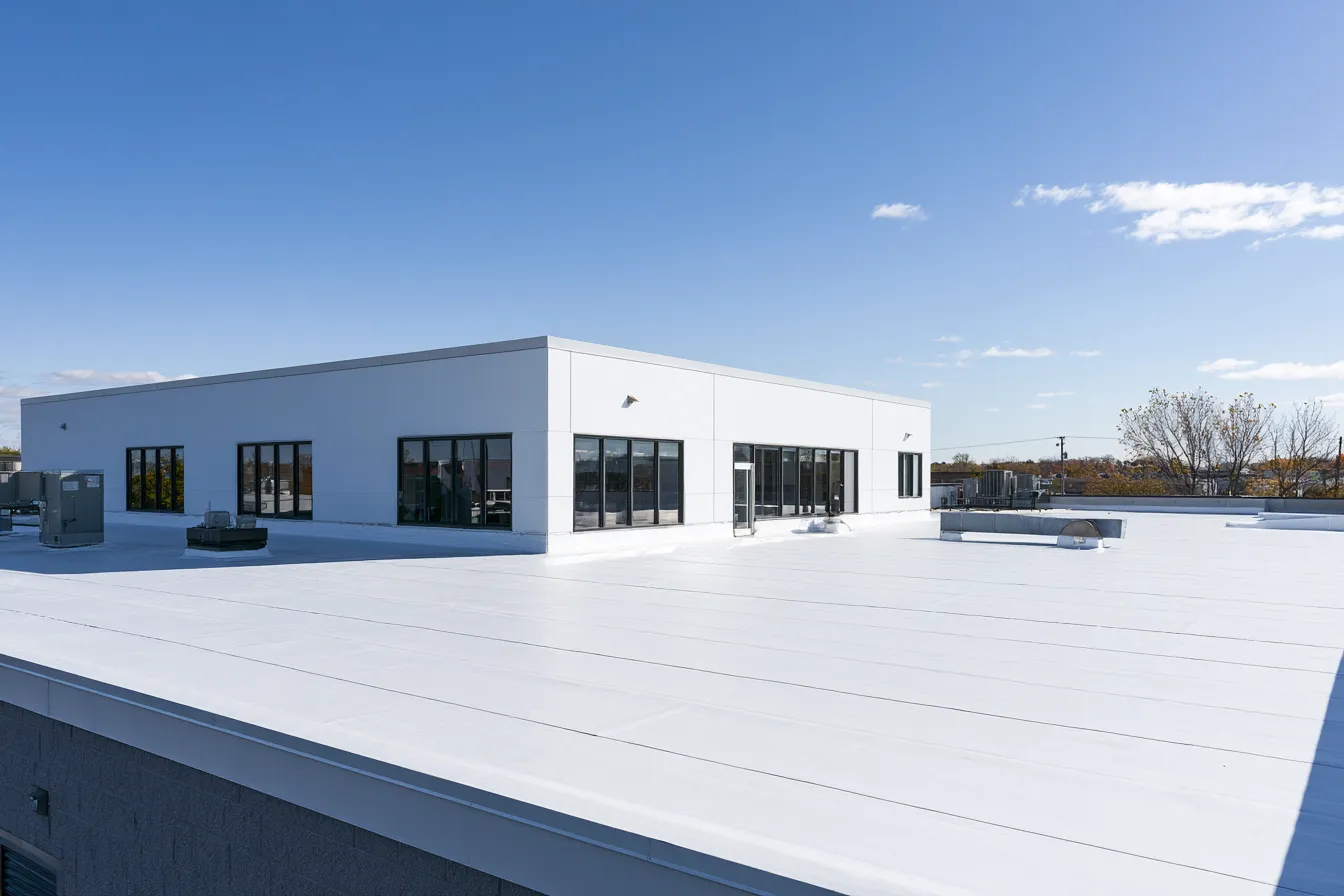
The order protects the building, and nothing is priced before the roof has been walked and the drainage understood. Each step below happens before a number is discussed.
A roofer surveys the building
The roof surface, the seams, every penetration, and where the water is meant to leave. Core samples where the makeup of the assembly is unclear.
The findings come back with photographs
What is failing, what is sound, and what the drainage is doing, so the decision is made against evidence.
The work is sequenced around occupancy
Which sections, in what order, and what it means for the tenants underneath while it happens.
Seams, penetrations and where they fail
Q1The roof only leaks in one place. Why survey the whole thing?
Q2Can we coat it instead of replacing it?
Q3How disruptive is the work to the business below?
Q4Is ponding water actually a problem?
Q5Who carries the warranty on a commercial system?
Working around a business that is open
Say what the building is doing and a local commercial roofer walks the roof, checks the drainage against the roof and reports back with photographs before any number is discussed. There is no obligation attached to the walk.