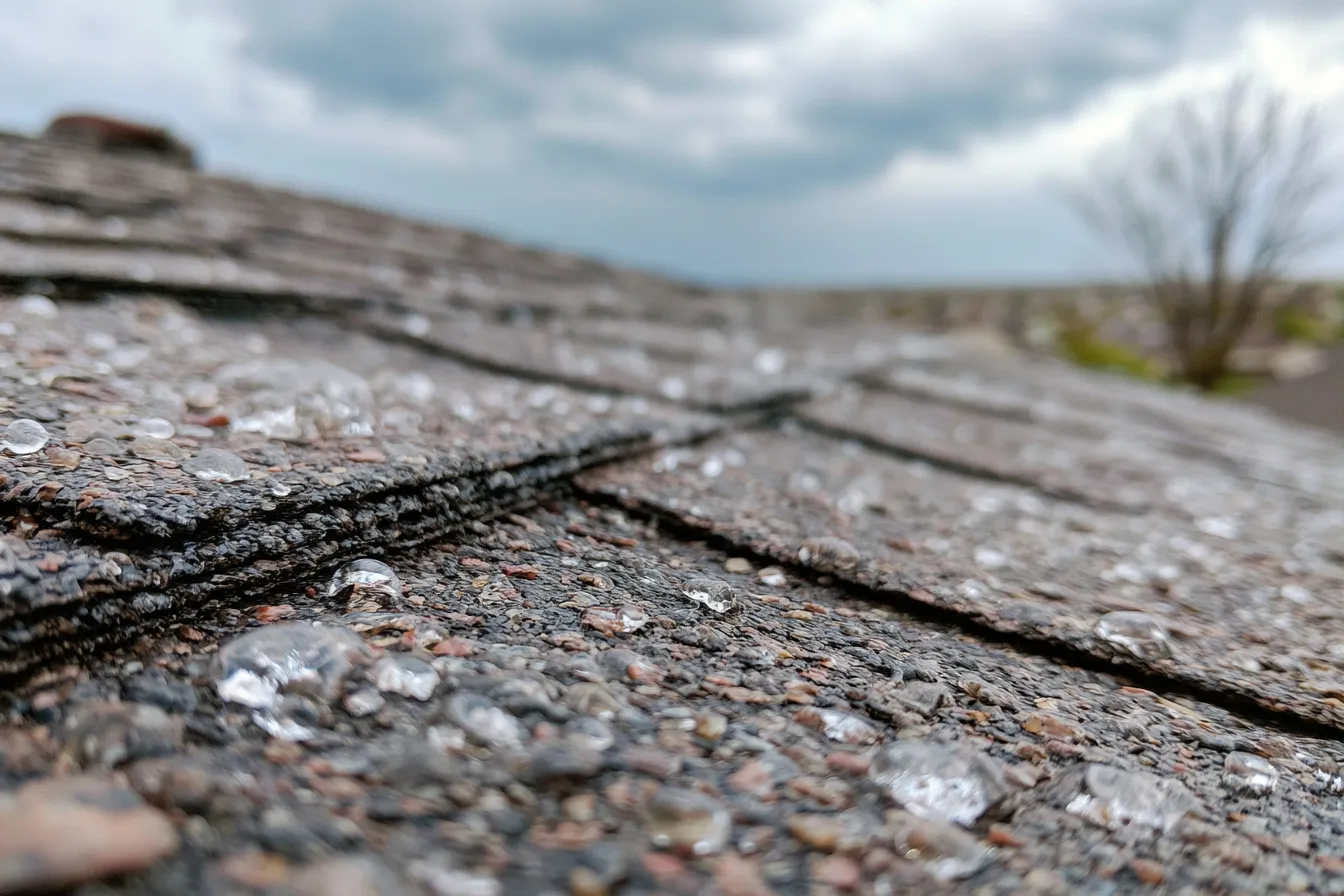
Every hail claim has a date attached to it, and that date does more work than most homeowners expect. It decides which policy terms apply, it starts the clock on the window you have to file, and it is the thing an adjuster uses to separate this storm from everything the roof has been through before. Getting it pinned is mechanical, and it is easier before you need it than after.
What a date of loss is doing
A policy responds to an event, and the event needs a date. That date determines which version of your coverage applies, and policies carry time limits on reporting a loss. Miss the window and the claim can be declined on the timing alone, whatever the roof looks like.
It also anchors the comparison. An adjuster looking at a roof is separating damage caused by one storm from wear accumulated over years, and a date gives them something to reason against. Without one, every mark on the shingles is arguably just age.
Where the date comes from
Usually from the weather record. Hail is logged by county, and the Denton County record holds the days when hail of a reportable size fell somewhere within it. That establishes that a storm happened and when, which is the part of the question a homeowner cannot supply from memory.
What the record cannot do is tie that storm to your address. It is county-granular by construction, so it tells you hail fell in the county on a given day and nothing more precise. Ask it to prove your roof was hit and it has nothing to say.
What ties the weather to your roof
A walked roof, photographed, with the findings dated. That is the piece that connects a county-level weather event to a specific address, and it is the piece only somebody standing on the roof can produce.
Fresh damage helps enormously here. Hail bruising reads clearly against weathered wear in the weeks after a storm and progressively less clearly as seasons pass. A roof documented soon after an event produces a record tied to that event. The same roof documented two years later produces a record of a roof that has been through several.
The order that protects a claim
Note the storm date when it happens, even casually. Have the roof looked at within weeks rather than months. Keep the photographs and the written findings, whatever they say, including a finding that the roof came through fine. Then decide, with your insurer, whether there is a claim worth opening.
That order matters because a claim opened on a roof that turns out to be sound still sits on your record with the carrier. Knowing what is up there before you call is the difference between a decision and a guess.
If a storm has gone through and you have not had the roof looked at, the date is the part that decays. Call (940) 290-6428 with the storm date, or send it to Aubrey Roofing Co with the address. A local roofer walks the slopes and dates what they find. Whether it becomes a claim is your call to make afterwards, with your insurer.
Contact us